
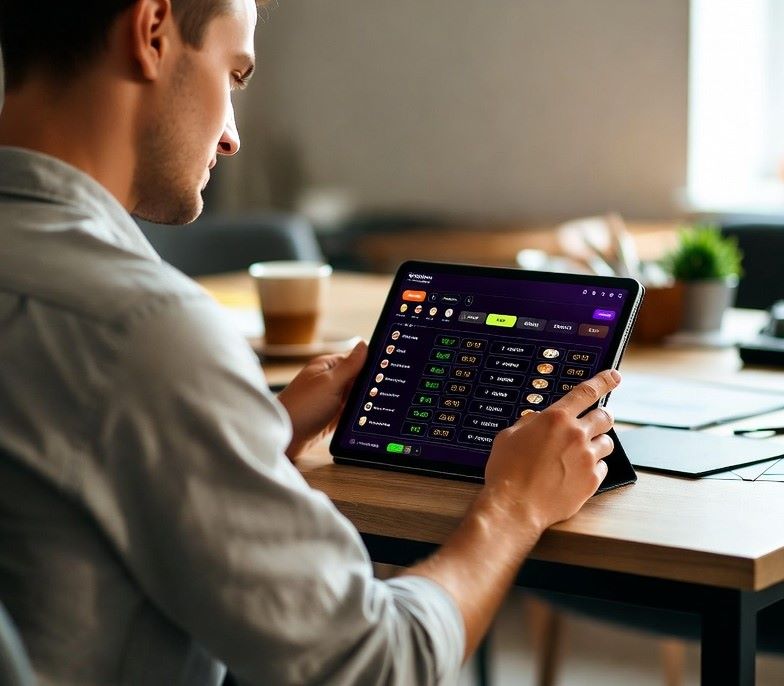
Global sports betting markets are evolving fast, shaped by digital habits and changing user expectations. What once felt like a straightforward activity, pick a team, check the odds, place a wager, is now being reimagined in ways that feel closer to gaming than gambling. Somewhere between the glow of mobile screens and the influence of modern game design, a new style of interaction is taking hold. It raises a simple question: why are more people gravitating toward these gamified experiences, and what does that mean for the future of sports betting?
Traditional Sports Betting Is Losing Its Grip
Sports betting revenue has grown globally over the past decade, yet audience behavior is shifting. According to the American Gaming Association, digital platforms now account for a significant share of wagers in regulated markets, signaling a move away from traditional, in-person sportsbooks.
Still, there’s a quiet problem. Classic betting formats, odds boards, spreads, totals, they can feel rigid. A bit like reading a spreadsheet for fun. For many modern users, especially those raised on interactive apps and fast-paced games, that experience can seem… flat. Even longtime bettors admit it. There’s only so much excitement in staring at numbers before kickoff.
Newer platforms are experimenting with hybrid models. Some even blur the line between gaming and wagering, offering mechanics that resemble popular online games. A good example is MM2 gambling, which blends familiar betting elements with game-like interactions. It feels less like placing a bet and more like participating in something active, almost playful.
It’s not just about attention spans. It’s about expectations. People now expect entertainment to be interactive, personalized, and quick to respond. Traditional sportsbooks, for all their reliability, sometimes struggle to match that pace.
Why Classic Sportsbooks Still Hold Strong
That said, writing off traditional sportsbooks would be a mistake. They remain dominant for a reason. Trust matters in this space, probably more than in most industries. Established platforms have years, sometimes decades, of operational history. They’ve built reputations around fairness, regulation, and consistency.
According to a report by the UK Gambling Commission, regulated betting operators continue to attract the majority of active bettors due to transparency and consumer protections. That’s not something newer, gamified platforms can replicate overnight.
There’s also a simplicity that many users appreciate. No avatars, no flashy animations, no extra layers. Just odds, teams, and outcomes. For some, that’s the whole point. A seasoned bettor once joked that adding too many features to a sportsbook is like putting arcade lights on a chessboard, fun, maybe, but distracting.
And let’s be honest. Familiarity has its own comfort. People tend to stick with what they understand, especially when money is involved. Even as newer formats emerge, a large segment of users continues to rely on traditional systems because they feel predictable and grounded.
The Rise of Hybrid, Gamified Betting Experiences
The real shift isn’t about replacing traditional betting. It’s about merging it with entertainment.
Gamified betting platforms are building experiences that sit somewhere between a sportsbook and a video game. They introduce progression systems, visual feedback, and interactive elements that make the process feel more engaging. It’s less about passively placing a wager and more about being part of an ongoing activity.
This is where concepts similar to MM2-style betting environments come into play again. These platforms don’t discard traditional mechanics entirely. Instead, they wrap them in a layer of interactivity. Users can still engage with odds and outcomes, but the journey feels different, more dynamic, more immersive.
From a design perspective, it makes sense. The gaming industry has spent years refining user engagement. Applying those lessons to betting creates a hybrid model that appeals to a broader range of users. Some come for the game-like experience. Others stay for the familiarity of betting fundamentals. This overlap also reflects deeper behavioral patterns, including how risk-taking shapes sports betting, where decision-making is influenced as much by psychology as by the platform itself.
Industry analysts have started to take notice. Deloitte has noted in its digital media trends reports that consumers increasingly prefer platforms that combine multiple forms of entertainment into a single experience. Betting, it seems, is following the same path.
Final Thoughts
Looking ahead, this hybrid model is likely to expand. We may see more personalized interfaces, social features, and even crossovers with esports and virtual environments. At the same time, traditional sportsbooks will continue to evolve, adopting select features without losing their core identity.
Of course, none of this changes the fundamental nature of betting. Whether it’s a classic sportsbook or a gamified platform like MM2 gambling, the risks remain. Outcomes are uncertain, and losses are always possible. According to the National Council on Problem Gambling, it’s important for individuals to set limits and approach betting as a form of entertainment, not a source of income.
So where does that leave us? Somewhere in the middle. Traditional betting isn’t disappearing. Gamified platforms aren’t just a trend. They’re part of a broader shift in how people interact with digital experiences. And in that space between structure and play, a new kind of betting culture is taking shape, one that feels a little less like math homework and a bit more like, well, something you’d actually choose to do on a Sunday afternoon.